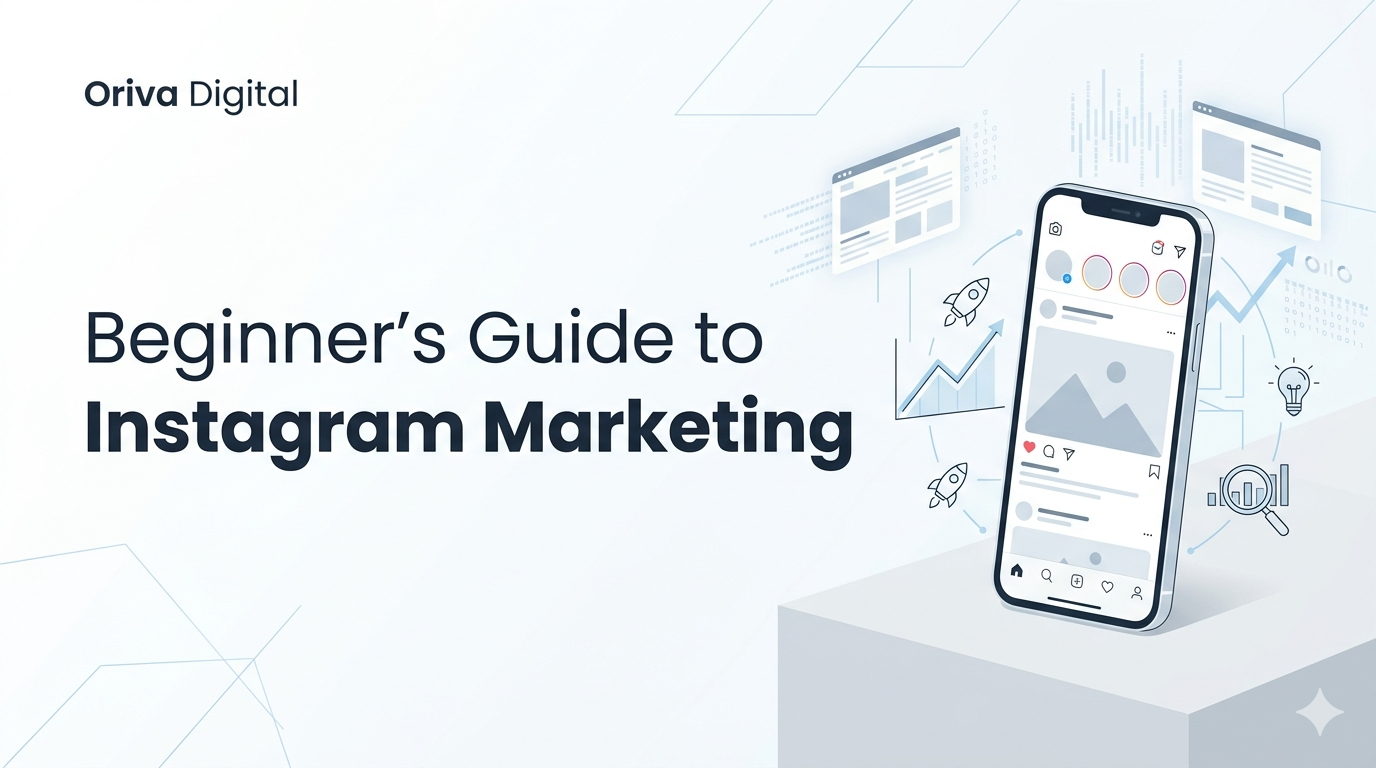
Beginner’s Guide to Instagram Marketing
Starting an Instagram account for your business can feel a lot like walking into a crowded room where everyone already knows each other. You look around and see other businesses posting great videos, getting lots of likes, and chatting with their customers in the comments. It is completely normal to look at your brand-new profile with zero followers and wonder how you will ever catch up. At Oriva Digital, we talk to small business owners every single day who feel totally overwhelmed by social media, but we always tell them the same thing: you do not need a massive budget, a professional camera, or a marketing degree to make this work.
Instagram is still one of the best, most practical ways to connect with real people who want to buy from independent businesses. You just need to know the basics of how the app works and what people actually want to see. This guide is going to skip the confusing jargon and the overly complicated strategies. Instead, we are going to walk you through exactly what you need to do to set up your profile, create posts that people care about, and start building an audience from scratch.
Understanding How Instagram Actually Works
Before you start taking pictures or recording videos, it helps to understand what you are actually looking at when you open the app. Instagram is not just one big bulletin board anymore. It is made up of four distinct areas, and each one serves a different purpose for your business.
The Feed (Your Main Storefront)
When someone clicks on your username, they land on your profile. The grid of photos and videos you see there is called your “Feed.” Think of this as the front window display of a physical store.
Posts on your feed are permanent. They stay there until you decide to delete them. Because this is the first thing new visitors look at, your feed should clearly show what you sell, what your services are, and what your business stands for. You do not need to post here every single day, but the things you do post should be good quality and helpful to your customers.
Instagram Stories (Behind the Scenes)
If your feed is the clean storefront window, your Stories are what happens behind the cash register. Stories are photos or short videos that only last for 24 hours before they disappear completely. You can find them in the little circles at the very top of your home screen.
Because they vanish after a day, Stories do not need to be perfect. This is the best place to be casual. You can use Stories to show yourself unboxing new inventory, give a quick update about your opening hours, or ask your followers a question. It is the most human part of the app.
Instagram Reels (How You Find New Customers)
Reels are short, vertical videos, usually set to music or a voiceover. While your feed posts and Stories are mostly shown to people who already follow you, Reels are completely different. Instagram actively shows your Reels to strangers who have never heard of your business but have shown interest in your industry.
If you want to grow your account and get new eyes on your business without paying for ads, Reels are the best tool you have. They might feel a little scary to create at first, but they are the biggest growth engine on the app right now.
Direct Messages (Your Sales Desk)
Also known as DMs, this is the private messaging side of Instagram. A lot of business owners treat social media like a one-way street, but the real magic happens in private conversations. When someone sends you a message asking about a product’s price or your availability, they are standing at your digital checkout counter. Treating your DMs like a friendly customer service desk is how you turn a casual follower into a paying client.
Practical Examples of Instagram Marketing in Action
To make this easier to picture, let’s look at how two very different types of small businesses use these different parts of Instagram to get real results.
Scenario 1: The Local Neighborhood Bakery
Imagine a small bakery that wants to get more people through the door on Saturday mornings. They do not care about getting followers in another country; they just want locals to buy their bread.
How they use Reels: On Thursday, the owner records a quick 10-second video showing hot chocolate chip cookies coming out of the oven. They add a popular song and tag their city’s location. The app shows this video to local food lovers.
How they use the Feed: Their main grid has clear, well-lit photos of their custom birthday cakes, along with a menu of their daily breads.
How they use Stories: On Saturday morning, they post a quick picture to their Story showing the line out the door, reminding people to come early before the croissants sell out.
The Result: A local resident sees the cookie video on Thursday, clicks the profile, sees the custom cakes on the feed, and decides to visit the shop on Saturday morning after seeing the Story update.
Scenario 2: The Freelance House Painter
Now think about a house painter. They provide a service, not a daily product. Their goal is to build trust so homeowners feel safe hiring them for big, expensive projects.
How they use the Feed: They post clear “before and after” photos of living rooms they have painted. They also post pictures of their five-star customer reviews.
How they use Stories: They post short videos explaining the difference between flat and eggshell paint, or showing how they tape off windows to keep the job neat.
How they use DMs: When a homeowner replies to a Story asking for a quote, the painter responds quickly, asks for a few photos of the room, and sets up a time to call.
The Result: When someone in the area needs their house painted, they remember the helpful tips and the great before-and-after photos, making this painter their first choice.
The Real Business Benefits of Instagram
Taking the time to learn Instagram is worth the effort, and it goes far beyond just getting “likes” on a photo. When you do it right, it directly impacts your bottom line.
People Trust Businesses They Can See
In the past, a business just needed a phone book listing. Today, people want to know exactly who they are buying from. When you show your face, share your daily struggles, and talk about your process, people start to feel like they know you. That feeling of familiarity builds massive trust. When it comes time to spend money, people will almost always choose the business they feel connected to over a faceless company.
It Is Free Word-of-Mouth Advertising
When you post something helpful or interesting, your followers will often send it to their friends or family through private messages. If you post a great tip about how to get stains out of a carpet, a follower might send it to their sister who just spilled coffee. You are essentially getting your current fans to do your marketing for you, completely for free.
You Learn What Your Customers Want
Instagram is the best free focus group in the world. If you want to know if you should stay open later on Fridays, or if you should start carrying a new product line, you do not have to guess. You can just ask your audience on a Story poll. Their answers will tell you exactly how to run your business better.
Actionable Tips to Get Started Today
Ready to get to work? Here are the practical, step-by-step actions you can take right now to set your business up for success.
1. Clean Up Your Profile Bio
Your bio is the short text at the very top of your profile. You only have a few lines to tell people exactly why they should care about you.
Your Name: Do not just put your name. Add what you do. For example, instead of just “Sarah Smith,” write “Sarah Smith | Chicago Dog Groomer.” This helps you show up when people search for dog groomers in Chicago.
Your Promise: State clearly who you help and how. (e.g., “Helping busy moms organize their homes.”)
Your Link: Always give people a clear instruction on what to do next, like “Click below to book an appointment 👇” followed by a working link to your website.
2. Plan What You Will Talk About
Staring at a blank screen wondering what to post is a terrible feeling. To fix this, pick three or four broad topics that you will always talk about. If you run a plant nursery, your topics might be: showing new plant arrivals, giving watering tips, showing behind the scenes of unloading trucks, and sharing customer photos.
By having these buckets ready, you never have to guess what to create. If you need more specific inspiration for your business, check out our guide on Instagram Content Ideas for Small Businesses.
3. Start Making Short Videos (Reels)
We mentioned Reels earlier, and they are truly that important. You do not need to do silly dances or point at words on the screen if you do not want to. Just prop up your phone and record yourself working, packing an order, or answering a common question your customers ask.
The more real and unedited it looks, the better it usually performs. People like real life, not commercials. For a full breakdown on how to record and post these videos, read our beginner breakdown on How Small Businesses Can Grow Using Instagram Reels.
4. Talk to People
Social media has the word “social” in it for a reason. If you just post a photo and then close the app for three days, you will not grow. Set a timer for ten minutes a day. Use that time to reply to every single comment people leave on your posts. Then, go look at other local businesses in your town and leave nice, genuine comments on their posts. Being a good neighbor online works exactly the same way it does in real life.
Common Beginner Mistakes to Avoid
As you get started, keep an eye out for these very common traps that trip up a lot of new business owners.
Selling in Every Single Post
If every time you post, the caption says “Buy this now” or “Book me today,” people will get annoyed and unfollow you. No one wants to watch a nonstop commercial. A good rule to follow is that 80% of your posts should be helpful, educational, or entertaining. Only 20% of your posts should be a direct sales pitch.
Being Inconsistent
It is much better to post two good things a week, every single week, than to post five times in three days and then disappear for a month. Find a schedule you can actually stick to without getting stressed out. If you are not sure what the right number of posts is for your specific industry, you can read our thoughts on How Often Should Businesses Post on Instagram?.
Hiding Behind Perfect Graphics
A lot of beginners use apps to make perfectly designed quote graphics and flyers, thinking it looks professional. But on Instagram, perfect graphics often look like spam or ads. People want to see real photos of your real business, even if the lighting isn’t perfect. Share the messy, human side of your work. For a deeper look at what to stop doing on the app, review Common Instagram Mistakes Small Businesses Make.
Conclusion
Learning how to market your business on Instagram does not happen overnight. It is a marathon, not a sprint. But if you take the time to set up a clear profile, share helpful tips, show the human side of your daily work, and actually talk to the people who comment on your posts, you will slowly build an audience that truly cares about what you do. Once you have that trust, the sales will naturally follow.
Running a business takes a lot of time, and trying to figure out social media on top of everything else can be exhausting. If you want a clear path forward without the headache of guessing what works, Oriva Digital is here to help. We build simple, effective digital strategies that help small businesses get found online and turn followers into real customers. Take a deep breath, post that first video, and remember that every big account started with zero followers just like you.