
How AI Is Changing Content Creation in 2026
If you rewind just a few years, the process of creating content for a business or a personal brand followed a very predictable, manual path. Writing a blog post meant staring at a blank screen for hours. Designing a social media graphic required navigating complex, expensive software. Editing a video meant a long weekend of cutting, syncing, and rendering.
The barrier to entry for producing high-quality content was incredibly high, demanding either specialized skills or a substantial budget to hire a team of experts.
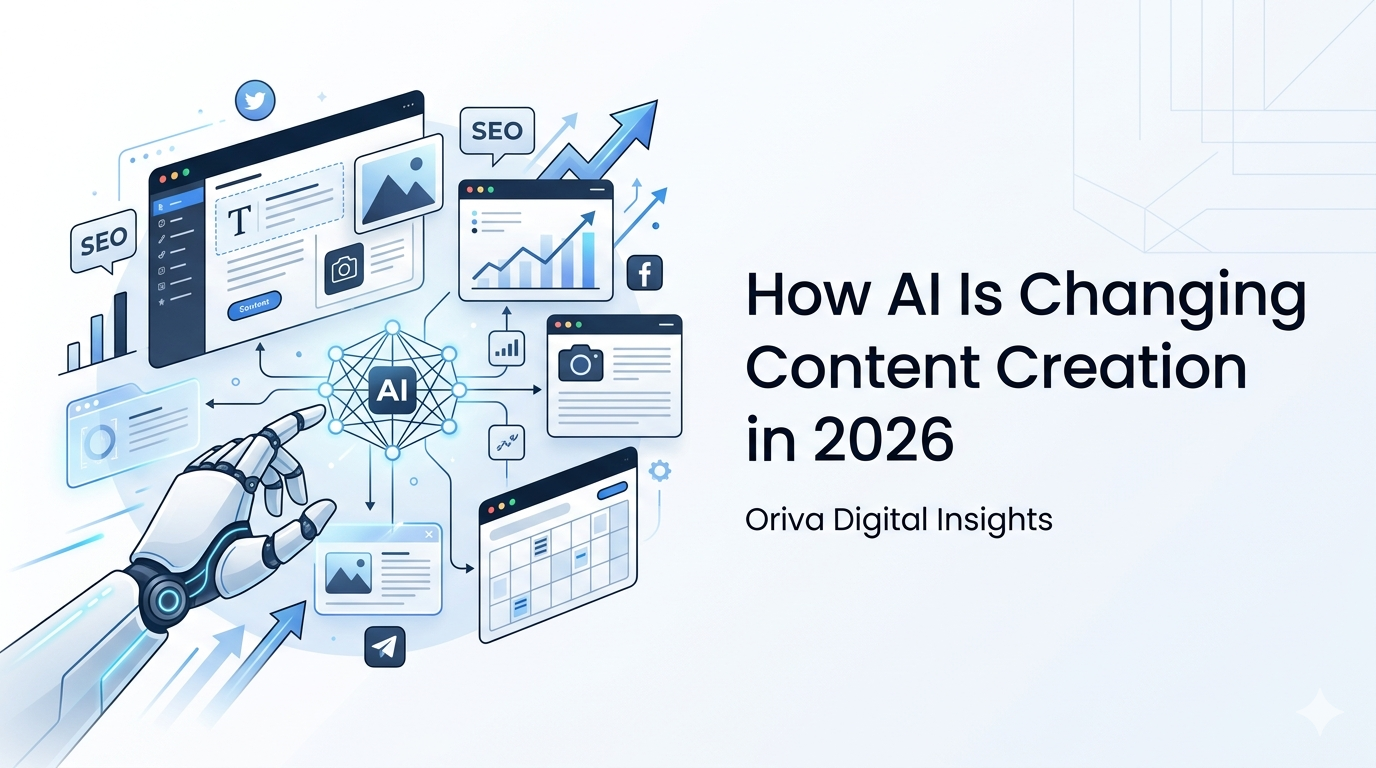
Fast forward to 2026, and the landscape has completely transformed. Artificial intelligence is no longer a fringe technology or a passing novelty; it is the foundational infrastructure of modern digital marketing. For creators, freelancers, and small business owners, AI has fundamentally shifted how content is conceived, produced, and distributed.
But this shift isn’t about machines replacing human creativity. It is about augmentation. AI acts as a tireless digital assistant, handling the repetitive, time-consuming tasks so you can focus on strategy, voice, and connection. In this guide, we are going to explore exactly how AI is changing content creation this year, what it means for your business, and how you can leverage these tools without losing your authentic brand voice.
The Shift from Manual Execution to Strategic Direction
To understand the impact of AI, you have to look at how it changes the role of the creator. In the past, the majority of a creator’s time was spent on execution—typing the words, cutting the video clips, adjusting the lighting on a graphic.
Today, AI models can execute those tasks in seconds. If you need a 500-word summary of a technical whitepaper, a generative text model can write it instantly. If you need a podcast transcript turned into an engaging social media carousel, AI design tools can generate the layout and populate the text before you have even finished your morning coffee.
Because the execution has become commoditized, the real value of a modern content creator lies in their direction. You are no longer just a writer or a designer; you are an editor, a curator, and a strategist. Your job is to provide the unique context, the personal anecdotes, the strategic prompt, and the final polish that turns AI-generated raw material into compelling, human-centric content.
This shift requires a new skill set. Instead of learning how to use complex video timelines, you need to learn how to communicate effectively with AI algorithms to get the exact output you need.
For a deeper dive into the specific platforms that are leading this charge, check out our guide on the Best AI Tools for Small Business Marketing.
Practical Examples: AI in the Modern Workflow
Let’s move away from theory and look at how this transformation actually plays out in daily business scenarios. How are creators using AI right now to scale their operations?
Scenario 1: The Solo Podcaster
The Old Way: A podcaster spends two hours recording an interview, then spends another four hours listening back to write show notes, pull out interesting quotes for Twitter, and manually clip a short video segment for Instagram.
The 2026 Way: After recording, the audio file is dropped into an AI editing tool. The AI automatically generates a perfectly accurate transcript, removes all the “ums” and “ahs,” writes the SEO-optimized show notes, and identifies the most engaging 60-second clip, formatting it into a vertical video with stylized captions. What used to take half a day now takes twenty minutes.
Scenario 2: The E-commerce Copywriter
The Old Way: A brand launches a new line of 30 products. The copywriter has to manually write a unique, SEO-friendly description for every single item, a task that takes an entire week of tedious typing.
The 2026 Way: The copywriter uploads a spreadsheet containing the basic specs (size, color, material) into a custom AI model trained on their brand voice. The AI generates 30 unique, persuasive product descriptions in under a minute. The copywriter then spends an hour reviewing and tweaking the output before publishing.
Scenario 3: The Social Media Manager
The Old Way: The manager struggles with “blank page syndrome” every Monday, trying to brainstorm five engaging hooks for the week’s Instagram content.
The 2026 Way: The manager uses an AI brainstorming partner, feeding it information about their target demographic and recent industry news. The AI instantly provides a dozen creative angles, which the manager refines and turns into finished posts. If you are struggling with writer’s block on social platforms, read our breakdown of the Best AI Caption Generators for Instagram.
The Business Impact of AI-Driven Content
The most significant business impact of this technology is the democratization of high-quality content. You no longer need an enterprise budget to compete with large brands online.
1. Unprecedented Speed and Agility When you can generate a first draft in seconds, your time-to-market drastically decreases. If a breaking news story hits your industry, you can use AI to help you draft an insightful blog post and a corresponding video script within the hour, positioning your brand as a real-time authority. This agility is a massive competitive advantage.
2. Cost-Effective Scaling For small businesses, scaling content used to mean hiring more full-time employees—a massive financial commitment. Now, a single marketing manager armed with the right AI tools can produce the output of a three-person team. This efficiency allows you to maintain a consistent presence across multiple platforms without burning out your budget or your staff.
3. Hyper-Personalization We are seeing AI tools that can automatically adjust the tone of an email or the imagery on a landing page based on the specific user who is viewing it. This level of personalization increases conversion rates because the content feels directly relevant to the individual consumer.
At Oriva Digital, we help businesses navigate this new landscape by integrating smart, efficient tools into their digital growth strategies. We consistently see that the brands experiencing the fastest growth are those that embrace AI to handle the heavy lifting, allowing their human teams to focus on building genuine relationships and high-level strategy.
If you are looking to streamline your internal processes before scaling your output, you might find our comparison of Notion vs Trello for Content Planning helpful.
Actionable Tips for Integrating AI into Your Strategy
Adopting AI doesn’t mean firing your writers and letting a machine take over your website. It requires a thoughtful, strategic approach. Here is how you can start integrating AI into your content creation process today:
Start with the Outline, Not the Article: The biggest mistake beginners make is asking an AI to “write a blog post about X.” The result is usually a generic, robotic article. Instead, ask the AI to generate a detailed outline. Once you have the structure, you can fill in the sections with your own unique expertise and voice.
Train the AI on Your Voice: Generic AI sounds like a robot. To get good results, you have to provide context. Before asking for copy, feed the AI a few examples of your past work. Say, “Analyze the tone and style of these three emails, and then write a new email about our upcoming sale using the exact same voice.”
Use AI for Repurposing: This is where AI truly shines. Take a piece of high-performing, long-form content you have already written (like a blog post or a whitepaper) and ask the AI to break it down into five Twitter threads, three LinkedIn posts, and a script for a YouTube Short. It maximizes the value of the work you have already done.
Treat AI as a Co-Pilot, Not an Autopilot: Never publish AI-generated content without reading and editing it first. AI can hallucinate facts, use repetitive phrasing, and completely miss the emotional nuance of a topic. You must act as the senior editor, fact-checking and injecting the “human element” before anything goes live.
Common Mistakes to Avoid
As with any new technology, there is a learning curve. Avoid these common pitfalls to ensure your content remains effective and trustworthy:
The “Sea of Sameness”: If everyone in your industry uses the exact same AI prompts, everyone’s content will start to look exactly the same. To stand out, you must inject your unique perspective, original data, and personal experiences into everything you publish. AI cannot replicate your lived experience.
Ignoring SEO Nuance: While AI can naturally integrate keywords, it often struggles with the deeper nuances of search intent. Just because an AI-generated article includes the right words doesn’t mean it actually answers the user’s question better than a human-written piece. Always prioritize the reader’s experience over keyword density.
Losing Your Authenticity: Modern consumers are incredibly savvy; they can usually spot a fully AI-generated article or a perfectly airbrushed AI image from a mile away. If your audience feels like they are interacting with a machine instead of a person, you will lose their trust. Use AI to speed up the process, but let your humanity shine through in the final product.
Conclusion
The way we create content in 2026 is faster, more efficient, and more accessible than ever before. Artificial intelligence has fundamentally changed the digital landscape, removing the technical barriers that used to hold creators back.
However, the most successful brands will not be the ones who use AI to mindlessly pump out thousands of generic articles. The winners will be the creators and businesses who use AI to handle the tedious tasks, freeing up their time to focus on what actually matters: strategy, storytelling, and building a genuine connection with their audience.
The tools are here, and they are incredibly powerful. The only question is how you will use them to amplify your unique voice.
If you are ready to modernize your digital presence but need expert guidance on how to integrate the latest technologies into your overarching strategy, the team at Oriva Digital is here to help. From comprehensive SEO to web design and content marketing, reach out today to see how we can elevate your brand in the modern digital age.